The history of Arta Terme brings together thermal tourism, culture, faith and village life. It can be found in the churches of its hamlets, in the works of those who have told the story of this land, and in traditions passed down through generations. This is a part of Carnia that lives not only in the past, but remains woven into everyday life.
Arta Terme’s modern history as a tourist destination began in the 19th century, when the Fonte Pudia spring gained widespread renown. Following the opening of the first thermal baths in 1870, Arta and Piano d’Arta became popular holiday destinations for the Friulian bourgeoisie and nobility, as well as visitors from the Austro-Hungarian Empire. Hotels, villas and gathering places transformed the village, ushering in a lively period between the late 19th and early 20th centuries.
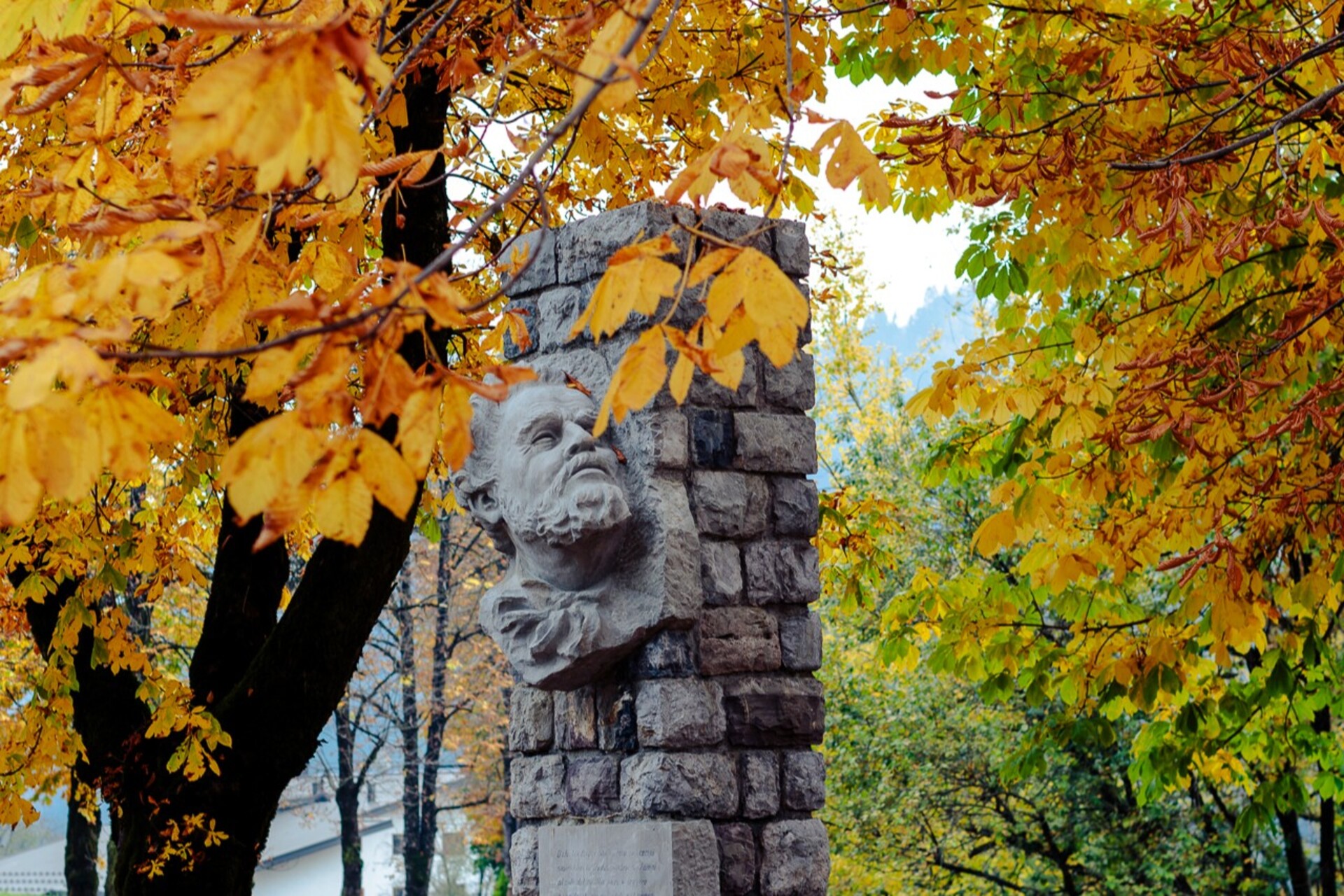
Among those who came to stay was Giosuè Carducci, who spent time in Piano d’Arta in August 1885. The First World War brought this cosmopolitan period to an end, but it did not erase the area’s tradition of hospitality or its cultural vitality.
In the years that followed, writers, musicians, artists and scholars continued to preserve the memory of Carnia. In Arta Terme, however, this memory has never remained confined to books: many customs have been cherished and passed down, and are still part of village life today.
Here, traditions are passed from one generation to the next and live on in everyday gestures, in the streets and at community celebrations.


People who left their mark
The best-known name is Giosuè Carducci. During his stay in Piano d’Arta in 1885, he found rest and inspiration and wrote Il comune rustico. His visit remains one of the most celebrated episodes in the history of the thermal resort.
Arta Terme was also the childhood home of Gina Marpillero, who was born here in 1912. At the age of 68, after fifty years away from writing, she published Essere di paese: a vivid portrait of Carnian life in the early 20th century, told through its places, people and everyday relationships.
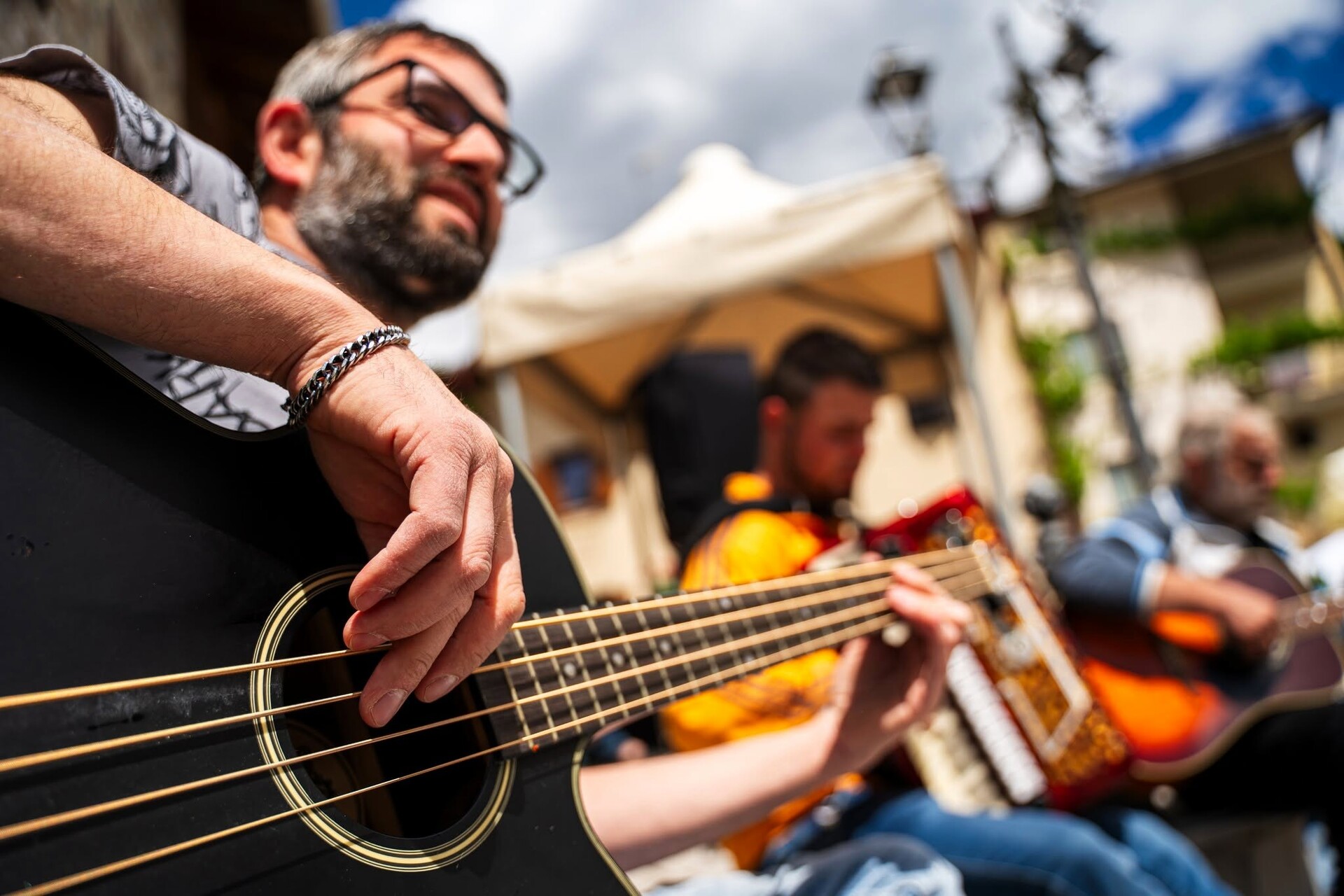
Carnian folk music owes much to Maestro Giuseppe Peresson, born in Piano d’Arta in 1872. Blind from childhood, he studied music in Padua before returning to Carnia, where he worked as an organist, composer and band conductor. For around twenty years, he and his son collected songs from the valleys, sending approximately 350 of them to the Società Filologica Friulana. The choir in Arta Terme that bears his name keeps his memory alive.
Luigi Candoni, a writer and playwright who helped renew Italian theatre in the post-war period, was born in Cedarchis in 1921. After discovering American theatre while a prisoner of war in the United States, he devoted himself to new forms of drama and organised the Festival della Novità in the 1950s and 1960s. The theatre in Tolmezzo is named after him.
Geologist, scholar and politician Michele Gortani, whose family came from Cabia, had deep ties with Carnia. Alongside his scientific research, he collected objects, tools, furnishings and other records of life in the valleys. These collections later became the foundation of the “Michele Gortani” Carnic Museum of Popular Arts and Traditions in Tolmezzo.
More recent history includes architect Gino Valle, who designed the thermal baths built in Arta in the 1960s. The original complex, designed between 1960 and 1962 and completed by 1964, is now recognised as a significant work of Italian architecture from the second half of the 20th century.


Traditions that are still part of village life
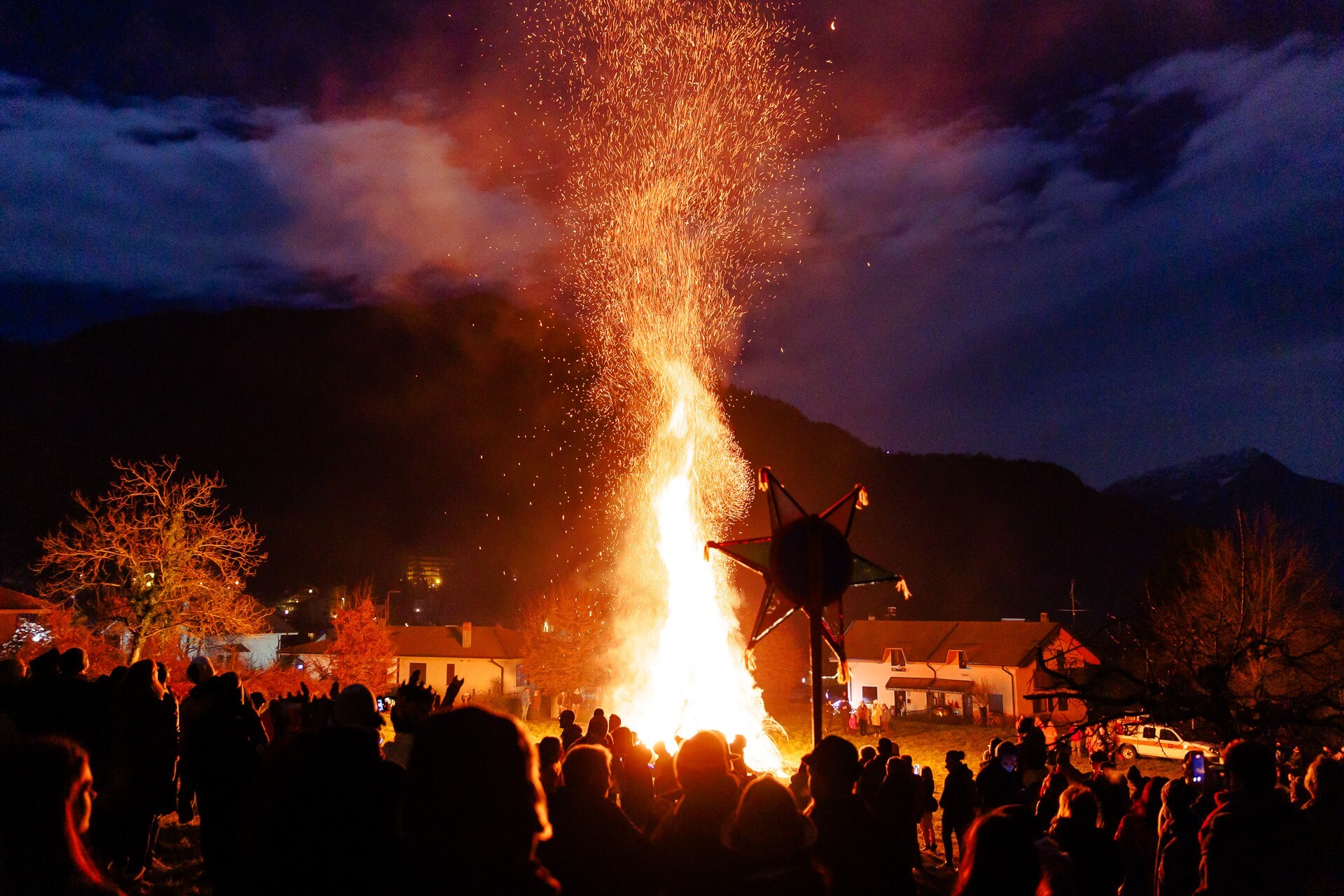
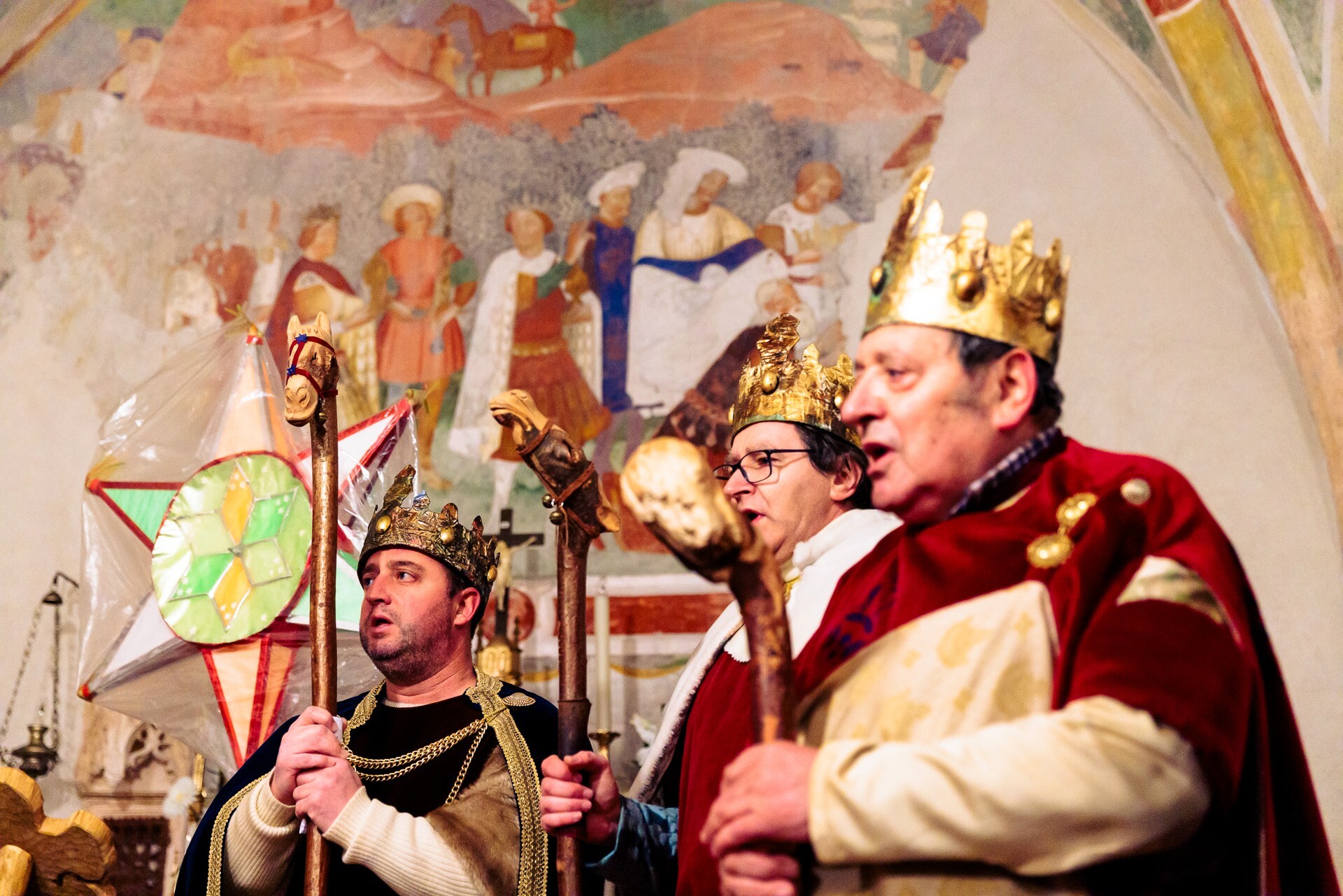
One of the most distinctive times of the year comes after Christmas. From 26 December until Epiphany, Piano d’Arta becomes the village of the Three Wise Men: Caspar, Melchior and Balthazar walk through the streets accompanied by shepherds and the Star. They visit homes, sing traditional songs, bring pince and leave a good-luck symbol on the doors.
Their costumes are inspired by the clothing depicted in a 15th-century fresco discovered in 1981 behind the altar of the little Church of the Holy Spirit in Chiusini. The Wise Men’s journey culminates on 5 January with the Femenate, the Epiphany bonfire, where people enjoy sopes indorades and try to predict the year ahead by observing the smoke and sparks.
In Avosacco, on the feast of Saint Bartholomew, the Tîr des cidulis tradition lives on: flaming wooden discs are launched into the darkness from a hillside and associated with the names of the village girls. This ancient ritual preserves the communal spirit of celebrations from times gone by.
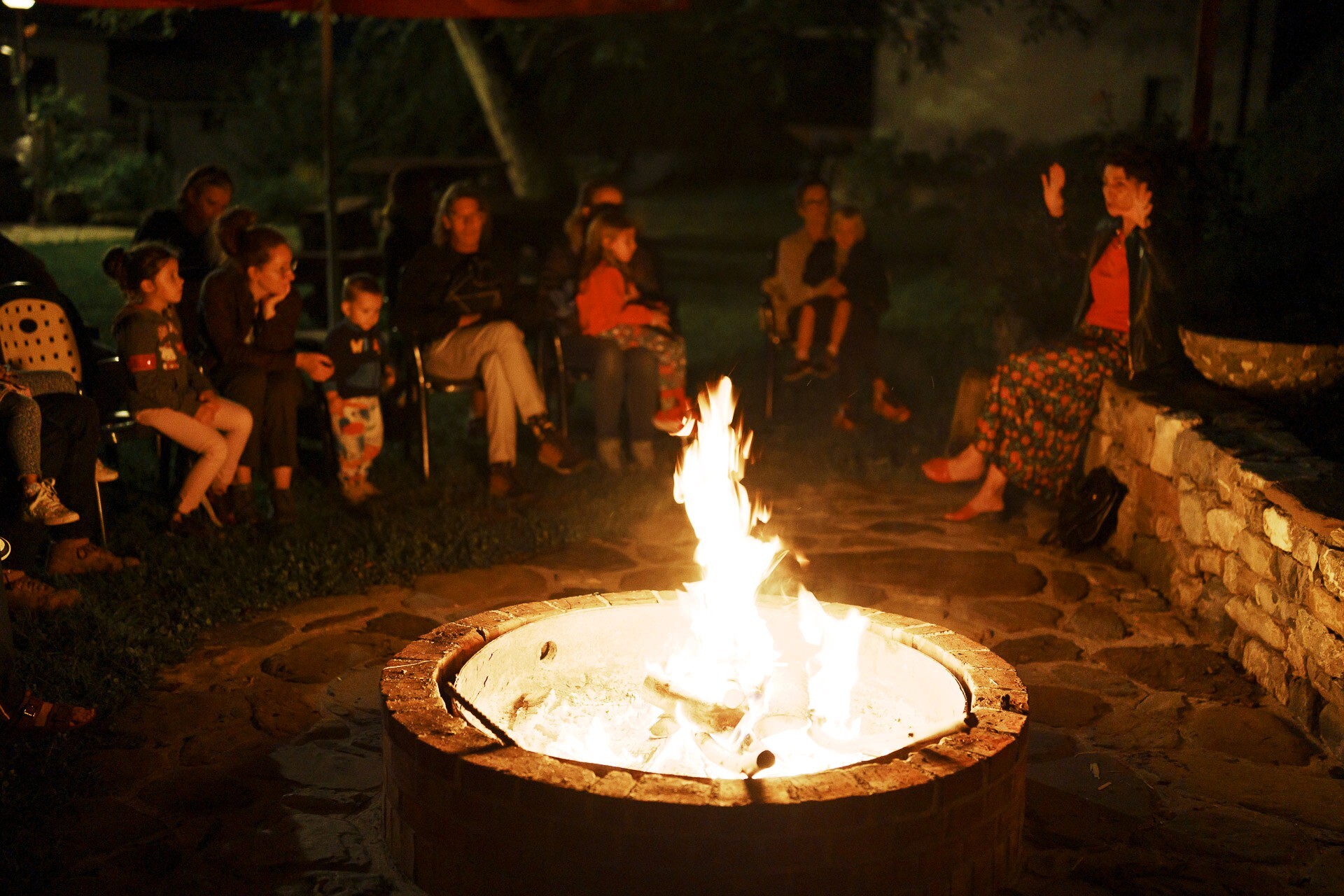
On Maundy Thursday, Arta celebrates Polente Cuinçade. In the past, each family contributed a handful of maize flour, and the village prepared a large polenta using whatever was left in the pantries at the end of winter. Today, the spirit remains the same: people turn up with a bowl and spoon and share what has been prepared.
Other customs are still part of everyday life. For example, when making cjarsons, women continue to gather in each other’s homes and work together around the same table. The same spirit can be found at Piano d’Arta’s Herb Festival, when the herbs used along the food trail are gathered and prepared by hand.
The calendar includes many other events rooted in community life and local cuisine: the Feast of Saint Lucy in Arta Terme, the Cjarsons Festival in Valle and Rivalpo, the Cjarsons Festival in Piedim, the Herb Festival in Piano d’Arta, dedicated to wild asparagus, mountain radicchio and spring mushrooms, the Beer Festival in Cedarchis, Plum Sunday and the Cjaminade pai Stai in Cabia.
These are different occasions, organised by associations, families and volunteers. Above all, it is this shared commitment that makes them an integral part of Arta Terme’s culture.


Churches, walking routes and places to discover
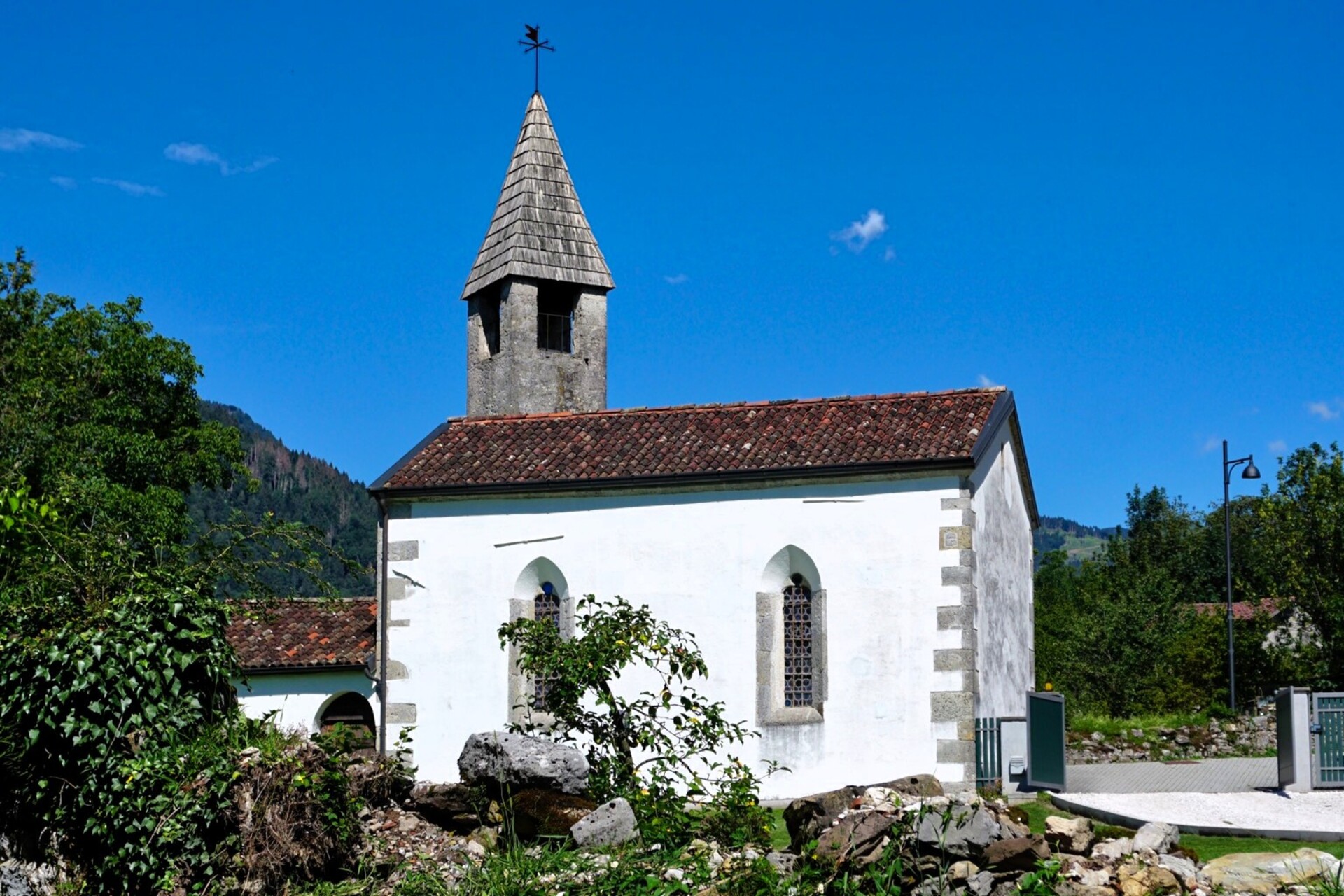
The churches in the hamlets tell another part of the local story. In Chiusini, the little Church of the Holy Spirit preserves the 15th-century fresco of the Three Wise Men. Just outside Piano d’Arta stands the small Church of San Nicolò degli Alzeri, which dates back to the Middle Ages.
On the hill overlooking the valley stands the Church of San Pietro, for centuries the mother church of Carnia. This connection is renewed on Ascension Day during the Bacio delle Croci (Kissing of the Crosses): the crosses from the ancient dependent churches, including the one from Arta Terme, are carried up to the church and brought together with the cross of the mother church in a centuries-old ritual.
The Romea Strata crosses Arta Terme along the Bût Valley, following a route used for centuries by pilgrims, merchants and travellers crossing the Alps.
In Piano d’Arta, the permanent exhibition “Fossils and Man” tells the story of Carnia as it was hundreds of millions of years ago. The finds, from nearby mountains and around the world, help visitors understand the geological origins of the landscape.